Fusing local identity and global best practice
Gensler Middle East Co-Managing Directors and Principals talk to Jason Saundalkar about the firm’s evolution in the Kingdom, its focus on talent, technology, and sustainability, and how design thinking is shaping the Kingdom’s next chapter
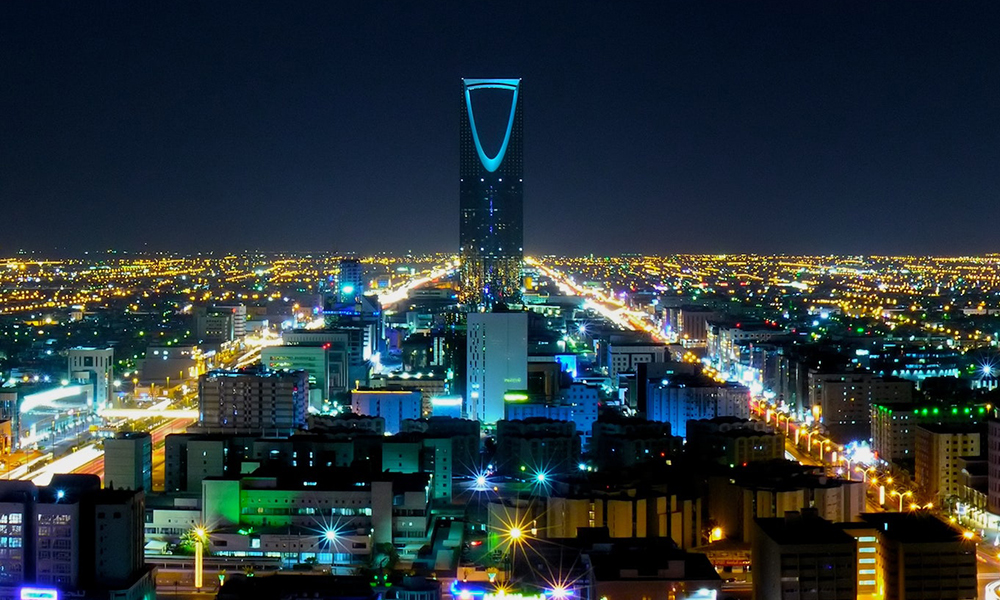
As Saudi Arabia continues to transform its cities in line with the objectives of Vision 2030, companies such as Gensler Middle East have an important role to play in terms of design innovation and delivering projects that fuse local identity with global best practice.
Here, Jason Saundalkar, Head of Content at Middle East Consultant speaks to Gensler Middle East Co-Managing Directors and Principals Todd Pilgreen and Tariq Shaikh about the firm’s evolution in the Kingdom, its focus on talent, technology, and sustainability, and how design thinking is shaping the Kingdom’s next chapter.
- Share an overview of Gensler’s business in Saudi Arabia over the last 12 months. Has the firm achieved RHQ status in the Kingdom?
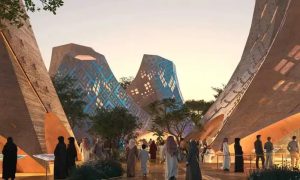
Todd Pilgreen (TP): Over the past year, Gensler’s presence in Saudi Arabia has grown significantly, aligning with the Kingdom’s unprecedented development pace. Our Riyadh office at Business Gate has become a key regional hub, reflecting our long-term commitment to the market. We’ve expanded our portfolio across commercial, mixed-use, hospitality and entertainment destinations from the Riyad Bank Headquarters in the King Abdullah Financial District to the Al-Madinah Entertainment Destination for SEVEN. Each of these projects embodies the ambition of Vision 2030 and Gensler’s belief in architecture’s role as a catalyst for economic and social transformation.
Tariq Shaikh (TS): Our strategy has been to embed ourselves in Saudi Arabia’s design ecosystem, not as an external consultant, but as an invested partner in the country’s growth. The last 12 months have been about deepening that partnership. While we continue to collaborate across borders, our Riyadh base functions as a fully integrated practice. Gensler’s global structure supports this, we operate as one connected network rather than isolated offices, allowing expertise from our 60 global locations to flow seamlessly into Saudi projects. A big focus for us this year has been on critical infrastructure, like data centres, as well as mixed use retail, hospitality and urban regeneration and planning. We are currently in the final stages of becoming an RHQ.
- How is Gensler faring with Saudisation and developing Saudi talent? What are the challenges you face, and what support do you need from government authorities?
TP: People are our greatest asset. Across the Middle East, we’ve built a team that represents more than 90 nationalities, and we’re investing in programs to attract, train, and retain Saudi designers and architects. This includes mentorship, professional development, and embedding local graduates into live projects from day one.
TS: Our commitment to diversity and inclusion is not just global policy; it’s local practice. We believe that when Saudi talent leads design in the Kingdom, the results are more authentic and impactful. The challenge lies in scaling training at the pace the market demands, the volume of projects is extraordinary. Continued support from government institutions in education partnerships and professional licensing pathways will be instrumental in building a sustainable pipeline of Saudi design leaders. There is also the issue of retaining Saudi talent; this is an issue across the Kingdom and clients and peers have said the same. There is an unfortunate tendency to make huge investments into our people, only for them to move elsewhere for an inflated salary.
- What are some of the key projects Gensler has handed over in the Kingdom in 2025? What feedback have you received from clients?
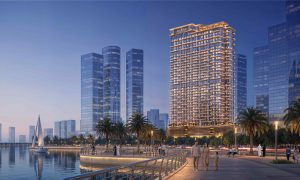
TS: The completion of Riyad Bank Headquarters and the 1364 Lifestyle Center are defining milestones. Riyad Bank’s 52-storey tower in KAFD, where our Dubai and Abu Dhabi teams led the full interior design, unifies more than 5,000 employees under one roof. It’s a project that celebrates the bank’s values of trust, professionalism, and bravery, expressed through materials, light, and technology. Client feedback has been overwhelmingly positive; the headquarters represents a new benchmark for how financial institutions in the Kingdom view workplace design.
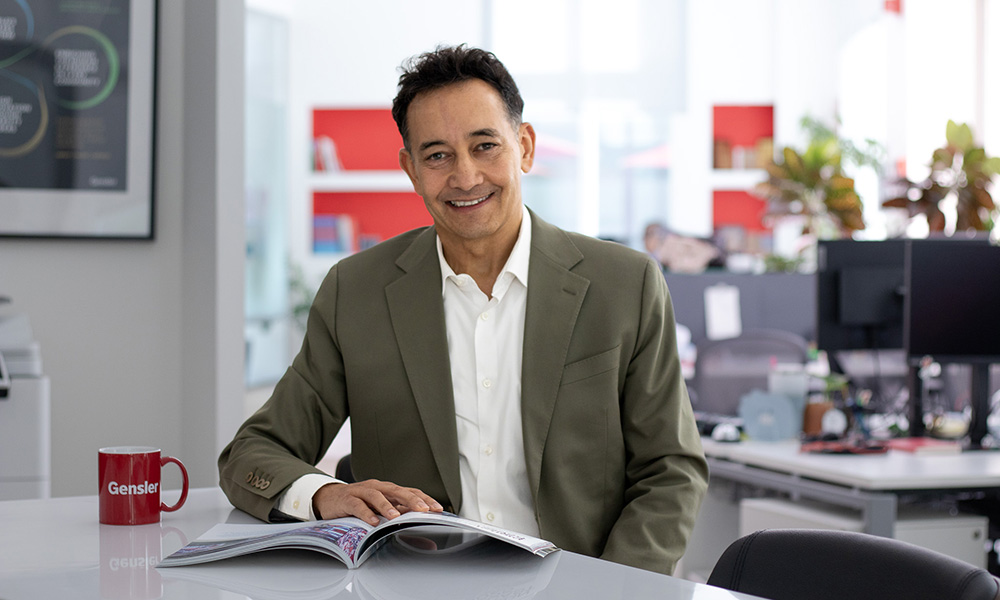
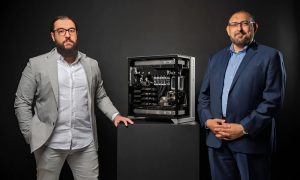
Tariq Shaikh, Co-Managing Director and Principal, Gensler Middle East
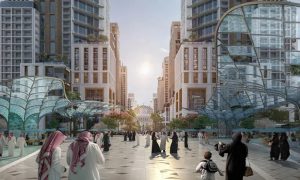
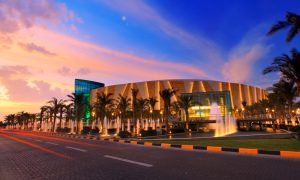
TP: Meanwhile, the 1364 Lifestyle Center in Riyadh’s Diplomatic Quarter has redefined what a mixed-use destination can be. Six curvilinear buildings host retail and entertainment options for the community with a big focus on walkable spaces. It’s a vibrant, inclusive development that resonates strongly with Vision 2030’s focus on liveability and culture. The client described it as “transformative” – a landmark that serves its community while setting a new benchmark for sustainable design.
- What are some of the key requirements that Gensler has seen from residential and commercial clients in the Kingdom over the last two years regarding architecture, interiors, and sustainability?
TP: Clients are increasingly focused on human-centric design as we saw in our global workplace survey results – spaces that enhance wellbeing, performance, and connection. In commercial and mixed-use developments, flexibility and experience-driven environments have become essential. The 2025 Global Workplace Survey told us that Saudi employees value offices that feel more like creative labs or nature retreats, emphasising calm, adaptability, and wellbeing. Sustainability is now a business imperative. Every client conversation includes environmental performance, from material sourcing to energy optimisation. Projects like Riyad Bank’s LEED Platinum target and the 1364 Lifestyle Center’s passive design strategies, orientation, shading, and use of Riyadh stone – demonstrate that sustainability and cultural authenticity can coexist seamlessly.
- How do those requirements compare with global residential and commercial trends?
TP: Globally, we see the same shift, workplaces are no longer just about productivity; they’re about purpose. Our survey shows Saudi Arabia is moving in step with leading markets such as the UAE and the U.S., where employees expect environments that support hybrid work, collaboration, and wellbeing. The Kingdom’s giga-projects have accelerated this evolution by embedding these design principles at a city scale. Saudi Arabia’s trajectory is unique in that it’s not adapting to change, it’s defining it. Projects like Diriyah Gate, NEOM, Qiddiya and AlShaya are creating global models for sustainable, connected living. Our role is to translate these ambitions into design that’s both globally informed and locally rooted.
- What were the three main goals that Gensler had for the Saudi market in 2025, and have they been achieved?
TS: Our goals were clear: establish a permanent base in Riyadh, deepen our partnerships through major local projects, and contribute meaningfully to Vision 2030’s built environment. I’m proud to say we’ve achieved all three. Gensler is now embedded in the Saudi market, delivering work that aligns with national priorities across finance, culture, and entertainment.
TP: The next step is expansion, not in scale alone, but in impact. We aim to mentor emerging Saudi designers, strengthen our collaborations with public agencies, and continue advancing design excellence that supports the Kingdom’s long-term transformation.
- What are the challenges that Gensler faces in the Kingdom as a business? What are your strategies to overcome them, and what support do you need from authorities?
TP: Every market undergoing rapid growth presents challenges. The speed of development in Saudi Arabia demands exceptional agility, from resource planning to coordination with evolving regulations. Our strategy is to leverage Gensler’s global network to provide that agility and to hit the ground running when it comes to quick turnarounds for project design. We are able to bring proven delivery models and digital platforms that maintain quality and consistency at scale and that’s been a real game-changer for us. The regulatory environment is evolving positively, but continued collaboration between design firms and government entities will be essential for streamlined permitting, materials approval, and sustainability certifications. As the market matures, there’s a great opportunity for Saudi Arabia to set new global standards in design governance.
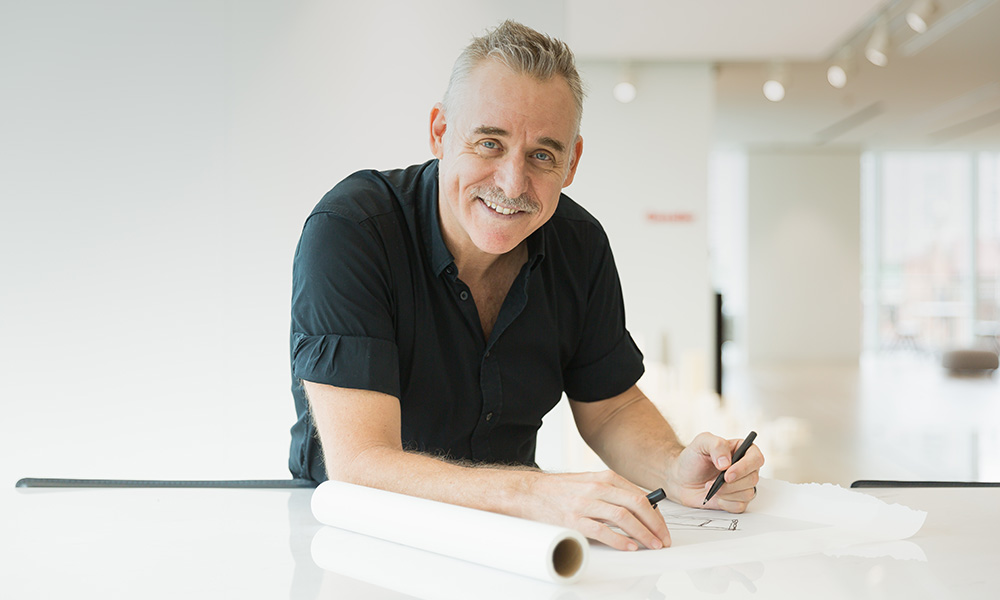
Todd Pilgreen, Co-Managing Director and Principal, Gensler Middle East
- Share an overview of the Saudi construction market in 2025 – what are your expectations from the market in 2026? Where do you anticipate future growth?
TS: Saudi Arabia today represents the largest construction market in history, with Vision 2030 projects valued at over US $1.1tn. The next year will see even greater diversification across commercial, cultural, and hospitality sectors. Future growth will come from integrated, mixed-use destinations that combine living, working, and leisure -developments that put people and experience at their centre.
TP: We also see strong momentum in digital infrastructure, from smart city frameworks to data centres and innovation hubs. The demand for design excellence in these areas is unprecedented, and Gensler’s global expertise positions us to help shape this new frontier of development.
- How does the construction market in Saudi compare to that of the UAE? What are some key differences and similarities?
TP: The UAE has long been the region’s benchmark for design innovation, but Saudi Arabia’s scale and ambition are unparalleled. In the UAE, projects tend to be vertically integrated within established urban contexts. In contrast, Saudi Arabia’s projects, from Riyadh to the Red Sea, are about city-making. They redefine the relationship between architecture, infrastructure, and community.
TS: The similarity lies in shared ambition. Both markets are driven by visionary national agendas, Vision 2030 and We the UAE 2031, that prioritise wellbeing, technology, and sustainability. Together, they’re setting the standard for what the built environment in the Middle East can achieve.
- A number of data centres have been announced or are in the works in the Kingdom – how do you see this segment shaping up, and how does Gensler plan to capture its share?
TS: Data centres are now among the most important building types shaping the Gulf’s future. The region’s capacity is set to triple from 1GW to 3.3GW within five years, driven by AI and cloud adoption. Saudi Arabia is a core part of this story. Our focus is on designing architectural identity for the invisible asset, ensuring that even highly technical facilities contribute meaningfully to their urban or desert context. We see opportunity in both large-scale campuses and edge data centres located closer to urban cores. These facilities require thoughtful design that balances visibility, security, and community integration. Our global data infrastructure experience, combined with local delivery capability, enables us to offer clients not just technical efficiency but enduring civic value.
- What are the specific architectural requirements for data centres in the Kingdom? How do those differ from Western markets?
TS: Saudi data centres must navigate two primary conditions – the desert periphery and the urban edge. On the outskirts, the emphasis is on resilience: materials, cooling systems, and forms that respond to extreme climate while projecting innovation and responsibility. Within cities, especially for edge facilities, integration becomes crucial. These buildings should ‘hide in plain sight’, blending with their surroundings yet symbolising progress. These edge facilities are far more common across Europe. We’ve got a high volume of data centre projects that are both live and complete across Europe and the US, more than we currently have in the Kingdom. That said, this is the market we are expecting to pull most of our global resources for critical infrastructure projects over the next five years. In Western markets, regulation and climate drive efficiency. In the Gulf, it’s also about cultural legibility, ensuring architecture reflects regional identity even in hyper-technical typologies. Gensler’s approach uses local abstraction and material expression to ground data infrastructure in place, while meeting international standards of performance. We recently worked on a project in the US where we completely redesigned the internal layout of a data centre. It was received so well the client will roll out this design globally.

- As an architecture/design house, what challenges does Gensler face working on data centre projects specifically? How do you address those challenges?
TS: The primary challenge is balancing security, scalability, and design integrity. These are buildings that operate 24/7 and demand flawless performance. We approach them as we do any other project, through data-driven design. Using our proprietary tools like gPlanet and gBlox, we model resilience, energy consumption, and spatial optimisation from the earliest stages. Our philosophy is that even the most functional buildings deserve thoughtful architecture. By combining computational design, regional insight, and sustainable material strategies, we’re turning data centres into civic icons that symbolize technological and cultural advancement.
- Anything else you’d like to add?
TS: The past year has proven that design is central to Saudi Arabia’s transformation. As architects and planners, our role is to help the Kingdom translate its extraordinary vision into spaces that enhance daily life, from workplaces that inspire to cities that connect.
TP: Gensler’s mission is simple: to create a better world through the power of design. In Saudi Arabia, that mission has found a remarkable canvas. The projects we deliver here will shape not just skylines, but the way people live, work, and interact for generations to come.