Dust, downtime and delays: The hidden cost of equipment contamination on construction sites

Equipment availability, fuel efficiency, productivity, and schedule performance are all influenced by how effectively contamination risks are managed
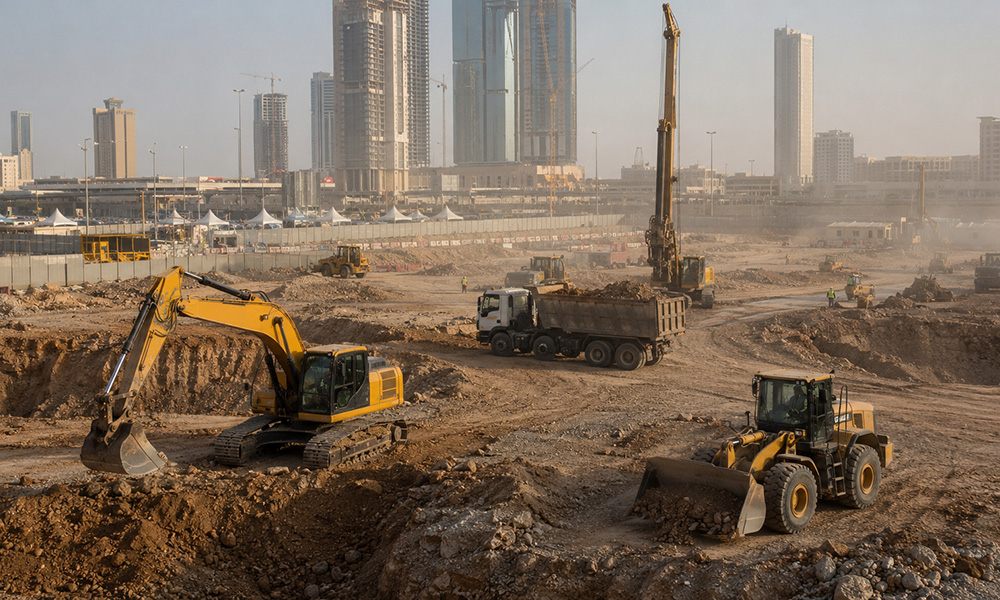
Across Saudi Arabia and the wider GCC, contractors face growing pressure to control costs, maximise equipment availability, and keep projects on schedule. Rising fuel expenses, demanding productivity targets, and tight project timelines mean every asset must perform reliably.
Yet one factor that significantly influences fleet performance is often treated as a maintenance concern rather than a business issue: contamination.
Dust, airborne particulates, water, and other contaminants can affect fuel consumption, equipment efficiency, maintenance requirements, and uptime long before a visible failure occurs. For construction fleets operating in harsh environments, contamination control is increasingly becoming a critical part of operational reliability.
A contamination issue rarely remains a maintenance issue.
When dust becomes a performance issue
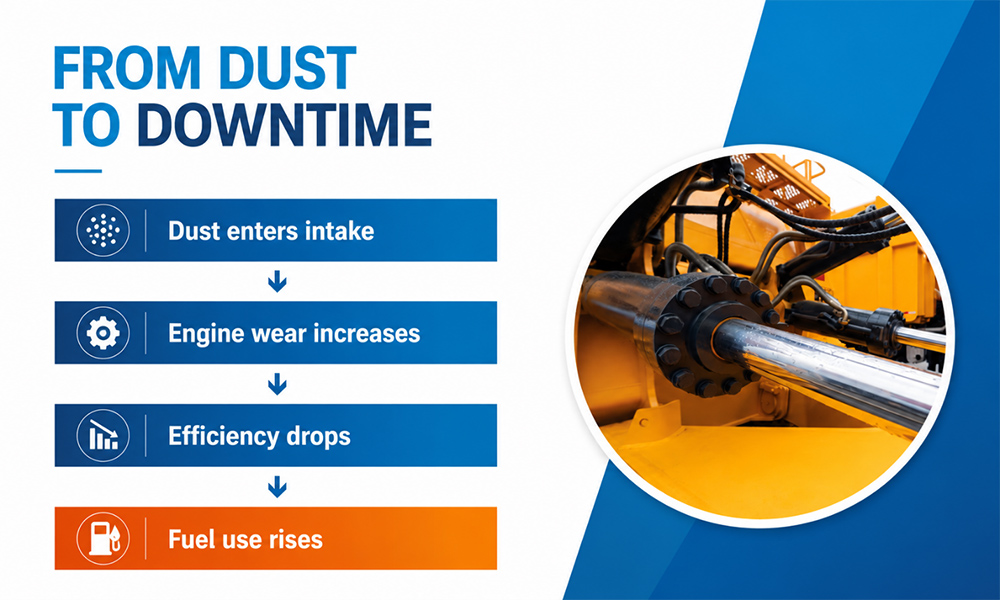
Construction equipment processes enormous volumes of air every day. In high-dust environments, filtration systems must continuously prevent contaminants from reaching critical engine components.
When contaminants enter the engine, wear can begin long before operators notice a problem. Restricted airflow and component wear reduce combustion efficiency, forcing equipment to work harder to achieve the same output.
The impact often appears gradually:
- Increased fuel consumption
- Reduced engine efficiency
- Shortened component life
- More maintenance interventions
- Unexpected downtime
For contractors managing multiple machines across multiple sites, even small losses in efficiency can accumulate into meaningful operating costs.
Hydraulic and fuel system contamination
Hydraulic systems and fuel systems are equally vulnerable to contamination.
Particles entering hydraulic circuits can accelerate wear on pumps, valves, and actuators, reducing efficiency and machine responsiveness. Fuel contamination can affect injector performance, spray patterns, and combustion quality.
The combined effect is often overlooked. Restricted airflow, hydraulic losses, and contaminated fuel systems can all contribute to higher fuel consumption without triggering an obvious equipment fault.
Viewed on a single machine, the impact may seem manageable. Across an entire fleet, however, small efficiency losses can significantly increase operating costs while reducing equipment availability.
Reliability starts before failure occurs
A common misconception is that contamination becomes a concern only after equipment begins showing signs of failure.
In reality, the business impact often starts much earlier.
As contamination levels increase, equipment may require more frequent servicing, consume more fuel, and gradually lose performance. Downtime increases, equipment availability declines, and project schedules come under pressure.
The consequences frequently extend beyond the machine itself. Delayed milestones, disrupted workflows, idle labor, and reduced productivity can all affect project profitability.
This is why many leading construction organisations are moving beyond reactive maintenance toward broader reliability strategies focused on prevention and equipment protection.
Looking beyond maintenance
Effective contamination control supports more than maintenance performance. It helps protect airflow quality, fuel cleanliness, and hydraulic system integrity – factors that directly influence fuel efficiency, component life, and equipment uptime.
Organisations that regularly evaluate filtration practices often uncover opportunities to reduce avoidable wear and improve fleet availability.
As a global filtration and contamination-control specialist, Donaldson has spent decades studying how contaminants affect equipment operating in harsh environments. Evidence from a documented heavy-equipment mining operation demonstrates the value of disciplined contamination control. One MTU engine exceeded 51,000 operating hours without overhaul—nearly double the typical 25,000–30,000-hour service life. Four additional engines surpassed 40,000 hours, the operation maintained approximately 90% fleet availability, filtration-related maintenance costs were reduced by up to 75%, no engine dusting incidents were reported for more than 20 years, air filters remained in service for a full year instead of requiring three to four replacements annually, and the operation reported tens of thousands of dollars in annual labour and consumable savings.
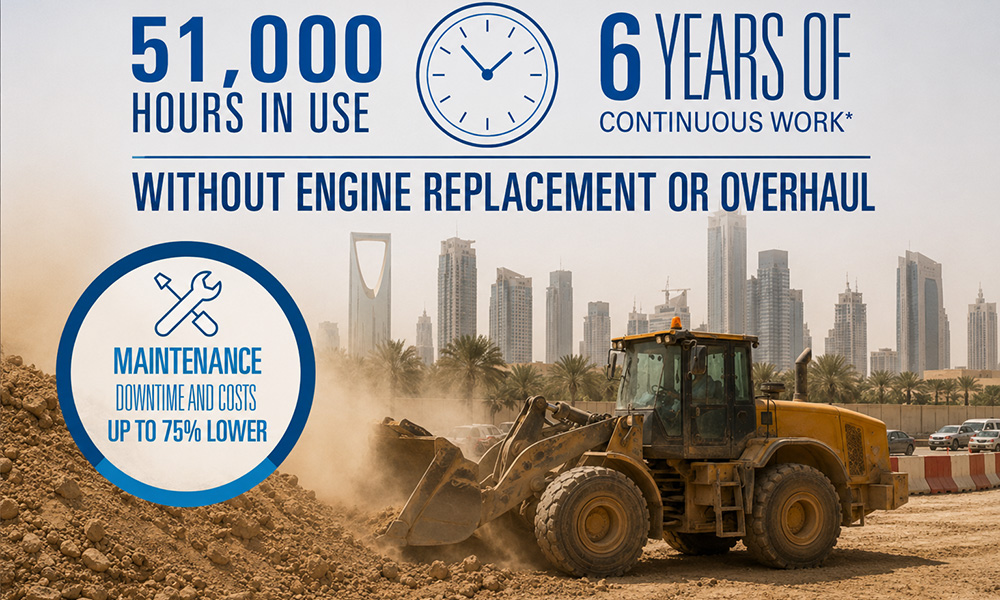
While construction applications differ, the example illustrates an important principle: controlling contamination can have a significant influence on equipment life, availability, and total operating costs.
Advanced filtration should therefore be viewed not simply as a maintenance component, but as part of a broader reliability strategy.
Supporting construction reliability in harsh environments
For construction companies operating in Saudi Arabia’s demanding environments, reliability is increasingly measured by business outcomes.
Equipment availability, fuel efficiency, productivity, and schedule performance are all influenced by how effectively contamination risks are managed.
The most effective reliability programs focus not only on responding to failures, but on controlling the conditions that cause wear, inefficiency, and downtime in the first place.
From awareness to action
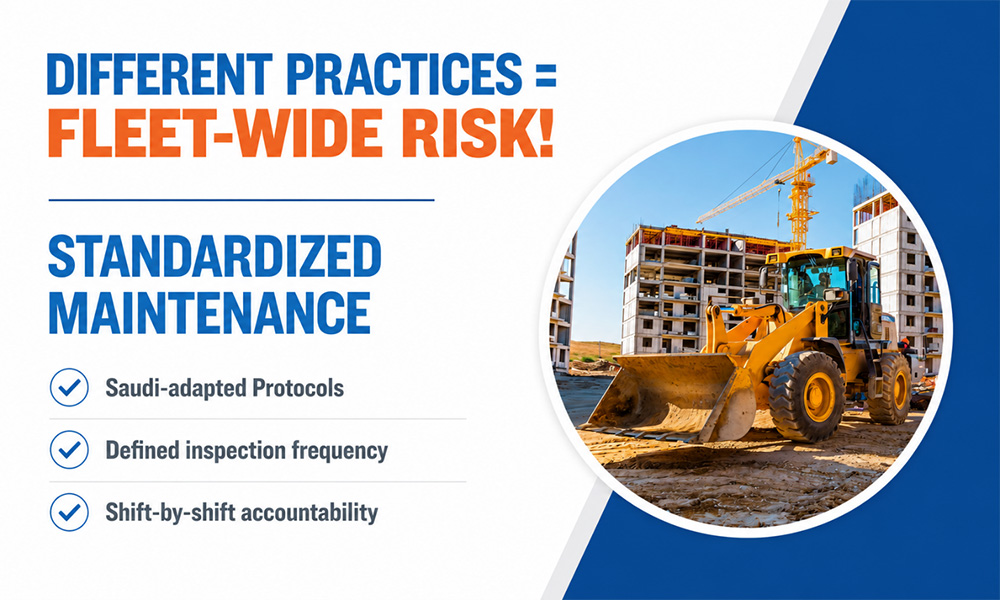 For many fleet operators, the challenge is not recognising contamination risks – it is understanding where those risks exist.
A practical starting point is a structured review of contamination-control practices across air intake, fuel, and hydraulic systems. Many fleet operators begin with a contamination-control checklist to benchmark current practices, identify potential contamination risks, and uncover opportunities to improve equipment protection before conducting a more detailed fleet assessment.
For fleets operating in particularly demanding conditions, a filtration assessment can provide deeper insight into contamination risks and equipment protection strategies. Field evaluations and filter trial programs may also help validate performance under actual site conditions.
The takeaway
Three realities are becoming increasingly clear for construction fleet operators:
- Dust contamination affects equipment performance long before visible failure occurs
- Filtration influences fuel efficiency, equipment availability, and overall reliability
- Preventive contamination control helps support productivity, profitability, and project delivery
Reliability starts before breakdown
Construction professionals looking to strengthen fleet performance can access Donaldson’s Construction Equipment Filtration Guide or request a free fleet filtration assessment to identify contamination risks and opportunities to improve uptime, fuel efficiency, and equipment protection.