


Since its inception over a decade ago, Compass Project Consulting (Compass) has made a name for itself by offering tremendous results across a mix of projects in the region. The firm credits its success to its diverse and highly disciplined team who drives the delivery of world class project development solutions.
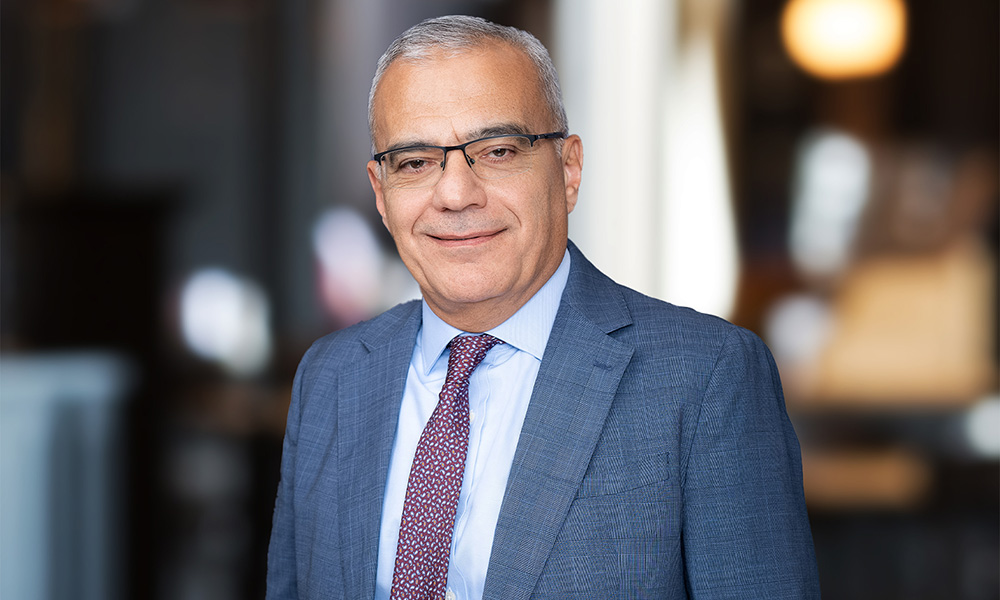
Talent has always been critical to the firm’s success in the UAE and Saudi Arabia, and after over a decade in operation, the company continues to place a high value on talent and talent development. “Talent development isn’t just important to Compass, it’s fundamental to everything we do,” comments Nassib Al-Sibassi, Group Managing Director at Compass.
Commenting on the firm’s operations in Saudi Arabia specifically, he notes, “Our business is built on people, and in a market as dynamic and ambitious as Saudi Arabia, continuous development is not optional; it’s essential. We operate in an environment where the pace of change is unprecedented, with mega-projects reshaping the landscape and setting new global benchmarks for construction and development.”
“To remain competitive and deliver the exceptional standards our clients expect, we must ensure our teams are not just keeping pace with market demands but anticipating them. This means investing heavily in capabilities, technical expertise, and leadership development. Our commitment to talent development is a commitment to the future of the Kingdom itself, because the projects we’re delivering today will define the built environment of Saudi Arabia for generations to come.”
Asked about the company’s focus on talent development in the Kingdom in terms of its vision and alignment with national mandates, as well as key goals for the 2025-2026 period, Sibassi highlights, “Our vision is straightforward: to become the employer of choice for Saudi construction and project management professionals, while serving as a cornerstone partner in realising Vision 2030. We’re not just aligned with the Kingdom’s Saudisation mandates, we’re actively shaping them. Our approach to talent development is deeply embedded in our business strategy, ensuring that every Compass initiative contributes to the Kingdom’s broader vision of building a world-class, knowledge-based economy.”
“For the 2025-2026 period, our goals are ambitious,” he states. “We’re targeting 45% Saudi national representation across our workforce, with particular focus on technical and leadership roles. We aim to graduate over 30 participants through our Compass Academy program, which is designed to accelerate capability development and professional readiness. Most importantly, as a Saudi-owned consultancy, we’re working to establish Compass as a recognised centre of excellence for construction management training in the Kingdom.”
“We view Saudisation not as a compliance exercise but as a strategic imperative. The Kingdom’s Vision 2030 depends on developing world-class Saudi talent, and Compass is proud to be at the forefront of this national transformation. Our success is intrinsically linked to the success of Saudi professionals, which is why we’ve structured our entire talent development strategy around building long-term careers, not just filling positions,” he says.
Initiatives in the Kingdom
Within the Kingdom, the company has invested significant time and resources into developing local talent, with the ‘Compass Academy’ standing as the firm’s flagship initiative.
“Our flagship initiative is the Compass Academy, a comprehensive graduate development program that has become a model for the industry. The Academy provides Saudi graduates with a structured pathway into construction management through an immersive 18-24 month rotational experience. Graduates spend this time rotating through different business functions, including project management, cost management, contract administration, planning, site supervision and within our support services. This exposure ensures they understand the full project lifecycle and can make informed career choices about their future specialisation,” Sibassi shares.
“Each Academy participant is paired with a senior professional who provides guidance, support, and real-world insights. We combine this mentorship with technical certifications, soft skills development, and exposure to international best practices. Academy participants work on actual Vision 2030 projects from day one, they’re not observers, they’re contributors, working alongside experienced professionals on some of the Kingdom’s most significant developments.”
Sibassi says the results speak for themselves. “Since 2023, we’ve enrolled over 45 Saudi graduates into the Compass Academy, with n 60% retention rate among Academy graduates after three years. Today, 15% of our Academy alumni have progressed into project management or specialist roles, with 15 Academy graduates now working on giga to mid-tier developments around the Kingdom.”
Beyond the academy program, Compass has launched several other targeted initiatives, including women in construction programs, technical upskilling workshops, and leadership development tracks via the Compass Talent Development and Localisation Strategy, which is specifically designed for high-potential Saudi nationals.
Asked about whether the company has any early engagement initiatives in the Kingdom, Sibassi is quick to note that the firm believes that talent development actually begins “long before graduation”. He explains, “This is why we’ve established partnerships with leading Saudi universities and technical institutes, and conduct regular campus presentations, career workshops, and technical seminars to showcase the opportunities within construction management.”
“One of our most effective strategies is inviting students to our project sites, giving them firsthand exposure to mega-projects in progress. Seeing the scale and sophistication of Vision 2030 developments transforms perceptions about construction careers. We also offer structured summer internships and co-op placements, providing students with meaningful work experience before they graduate. Many of our Academy participants first engaged with Compass during these early programs, so we know this pipeline approach works.”
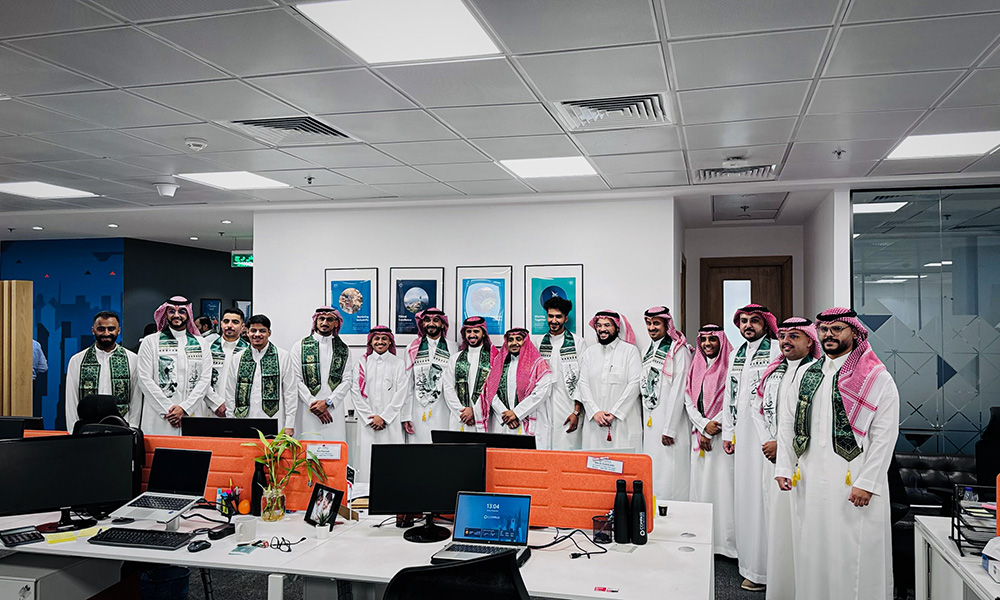
He highlights, “For exceptional students demonstrating passion for the built environment, we provide financial support and guaranteed pathways into the Compass Academy upon graduation. This early engagement is critical because construction and project management offer extraordinary career opportunities. By connecting with students early, we’re building a sustainable pipeline of talent while contributing to the Kingdom’s long-term capability development.”
Talking to Sibassi about diversity and inclusion, and how Compass attracts women specifically to join its ranks, he notes that the firm has established targeted recruitment programs specifically to attract female talent.
“The construction industry has historically been male dominated, but that’s changing rapidly in Saudi Arabia, and Compass is proud to be a part of this important transformation. We’ve established targeted recruitment programs specifically designed to attract female Saudi graduates into construction management, cost consulting, and project controls, actively engaging with women’s engineering and architecture programs at Saudi universities.”
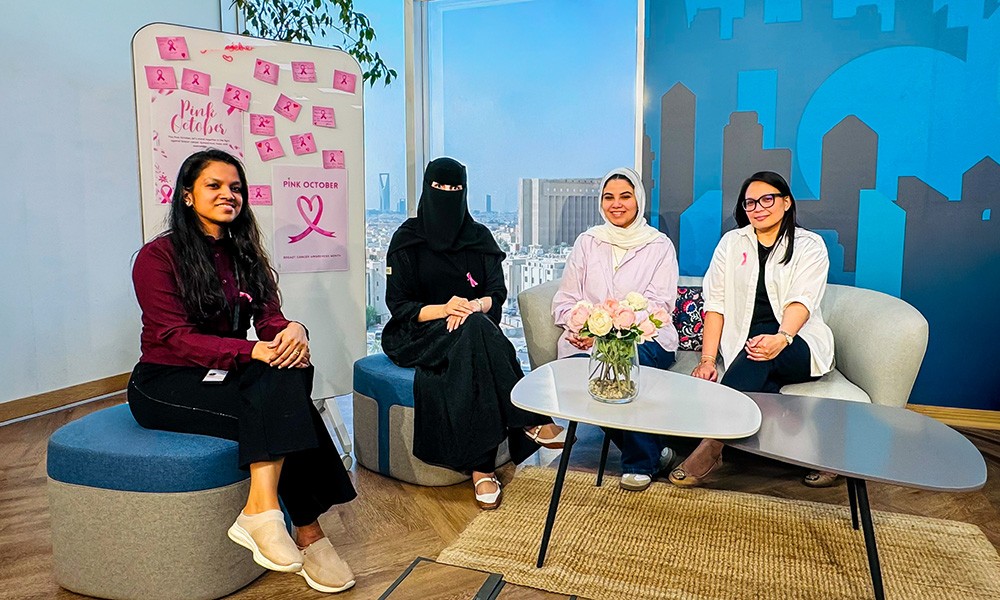
“Creating an inclusive workplace culture has been central, albeit a natural flow, to our approach. We’ve implemented policies and practices that ensure female professionals can thrive, including dedicated facilities on project sites meeting cultural and practical requirements, flexible working arrangements where appropriate, and zero-tolerance policies on discrimination or harassment. We’ve also established women in leadership mentorship programs that pair junior female professionals with senior leaders who can guide their career development,” he states.
He adds, “Female Saudi nationals have equal access to the Compass Academy and all development programs, and we’re seeing increasing numbers of women choosing construction management careers. Their contributions have been outstanding. We are also continuously working to increase female representation in management positions, through our employ for merit selection process, ensuring diverse perspectives inform our decision-making.”
“The Kingdom’s reforms have created unprecedented opportunities for women, and Compass is committed to ensuring female Saudi professionals have equal opportunities to build rewarding careers in construction and contribute to Vision
2030’s realisation.”
Overcoming challenges
The Saudi construction market is immense and while this means that there are a wealth of opportunities for talent from across the country, there are also several challenges that have to be navigated carefully.
Sibassi explains, “The Saudi market presents unique challenges that require thoughtful, strategic responses. The sheer scale of Vision 2030 projects means that every major construction firm is competing for the same pool of Saudi talent. The market is exceptionally hot, with demand far outstripping immediate supply. Our response to this challenge is differentiation through development.”
“We position Compass not as just an employer, but as a career accelerator. The Compass Academy provides something competitors cannot easily replicate: structured development with direct access to key decision-makers, offering mentorship and genuine career progression. We’re not hiring Saudis to meet quotas; we’re building careers.”
Another challenge that Sibassi highlights is knowledge transfer and experience retention. He remarks, “Many Saudi graduates enter the workforce with strong academic foundations but limited practical experience on how to translate what they learned into the work environment of managing complex, multi-billion-dollar projects. Our rotational program addresses this directly by ensuring graduates gain broad exposure across the project lifecycle. This approach allows them to discover their strengths, understand different disciplines, and make informed career choices. Once they select a specialisation, we provide deep technical training and increasingly complex responsibilities.”
He continues, “Retention in such a competitive market requires more than competitive compensation. We emphasise contributing to something larger than ourselves – Vision 2030 – while providing clear progression pathways and genuine ownership of outcomes. Our retention rates demonstrate this works. When people feel they’re building something meaningful and see their career advancing, they stay. Saudi professionals get world-class development and career opportunities, while Compass builds a loyal, highly capable workforce that understands our culture, standards, and ways of working.”
On the all-important topic of knowledge transfer/sharing – which ensures vital information and project know-how is not lost when team members move on or a project closes – Sibassi says that knowledge sharing is embedded throughout the firm’s organisational culture, and is also structured into its development programs.
“We conduct regular technical workshops where Academy participants and young professionals learn from experienced project directors, cost managers, and technical specialists. These sessions cover everything from contract administration to risk management, from stakeholder engagement to quality assurance. We also facilitate organic knowledge exchange between teams working on different projects, so a graduate working on a residential development can learn from colleagues delivering infrastructure or commercial projects, broadening their understanding and capabilities.”
He continues, “At the completion of every project, we conduct comprehensive lessons-learned sessions. These aren’t superficial exercises, they’re structured reviews identifying what worked, what didn’t, and what we’d do differently. Critically, these insights are documented and shared across the organisation, ensuring knowledge isn’t lost when projects close. We maintain a centralised digital platform where technical guidance, best practices, case studies, and lessons learned are accessible to all staff. This institutional memory is invaluable, particularly for young professionals seeking solutions to challenges they’re encountering for the first time.”
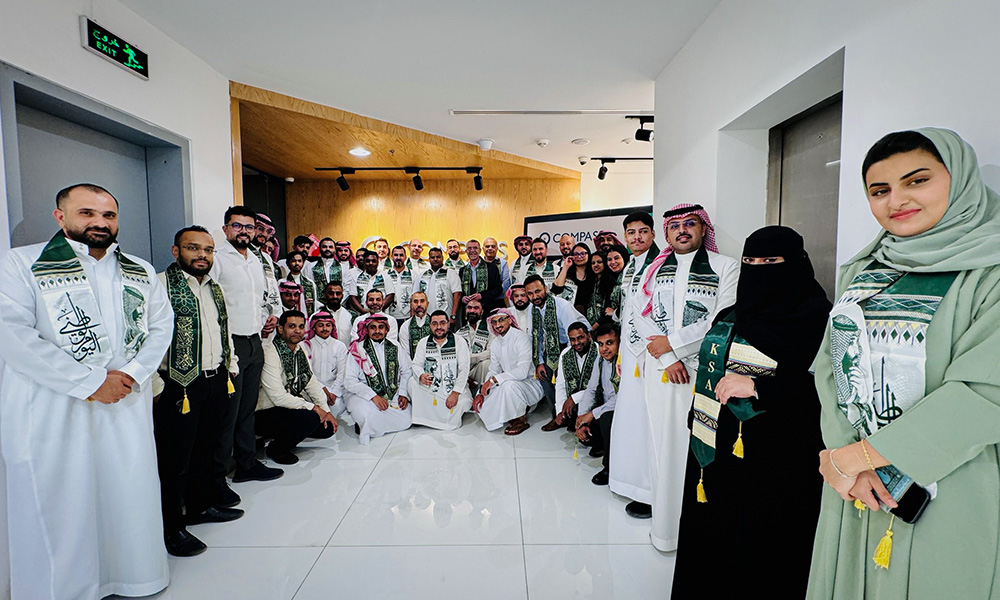
Beyond formal programs, Sibassi says the firm encourage informal knowledge transfer through mentorship pairings and shadowing opportunities. “Sometimes the best learning happens through observation and conversation. This systematic approach to knowledge sharing ensures Compass continuously improves, while accelerating the development of our Saudi talent base. Knowledge isn’t hoarded, it’s shared, because we’re stronger when everyone has access to our collective expertise.”
On the topic of the role the Saudi government can play in terms of supporting construction firms with talent development, Sibassi explains that Saudi authorities have already been “exceptionally progressive” in supporting workforce development. That said, he says there are still a few areas where additional support would enhance outcomes.
“While we’re committed to Saudisation, we still require specialised international expertise for knowledge transfer and technical roles. Streamlined processes for bringing in these specialists temporarily would help accelerate Saudi capability building.”
“Stronger formal partnerships between industry and educational institutions would ensure that important curricula remain aligned with market needs. Involving construction firms in the program’s design would help graduates enter the workforce better prepared. Government recognition and support for internationally recognised construction management certifications would also help Saudi professionals build globally portable credentials, while maintaining Kingdom-specific knowledge. Finally, tax incentives or direct support for companies investing heavily in training programs would encourage more firms to adopt comprehensive development models like the Compass Academy.”
He clarifies, “That said, the government’s Vision 2030 framework already provides substantial support for workforce development. The leadership’s commitment to human capital development creates an environment where companies like Compass can invest confidently in long-term talent strategies.”
Business in the Kingdom
Switching gears and discussing the company’s business and performance in the Kingdom in 2025, Sibassi points out that the year has been “transformative”.
“We’re currently engaged across the full spectrum of Vision 2030’s flagship developments, providing project management, cost consultancy, and contract administration services on projects. Our work spans a mixture of giga-projects and private investments, where we’re supporting the delivery of transformational urban developments, mixed-use destinations that will redefine entertainment and tourism in the region, residential developments addressing the Kingdom’s housing objectives, and infrastructure projects connecting communities and enabling economic growth,” he explains.
“What distinguishes our 2025 performance is not just the scale of our portfolio, but the depth of Saudi talent now leading these engagements. Increasingly, our project managers, cost managers, and technical leads are Saudi nationals who’ve progressed through our development programs. We’ve also strengthened our local presence, expanding our offices in Riyadh, Jeddah, and the Eastern Province, and have established dedicated project offices on major development sites.”
“This localisation reflects our long-term commitment to the Kingdom and positions us as a truly Saudi-based consultancy, not an international firm sometimes operating temporarily in the market,” he highlights.
Pressed for his views on the opportunities and challenges he sees for Compass in the coming years, Sibassi is highly confident about the firm’s potential as a result of the ambition and magnitude of Vision 2030.
“The Kingdom’s Vision 2030 represents perhaps the most ambitious national transformation program anywhere in the world. The pipeline of projects is extraordinary! For a firm with Compass’s capabilities, the opportunities are virtually unlimited. We see particular potential in second-phase developments as initial projects complete, infrastructure connecting the mega-developments, and operations and maintenance advisory as delivered projects enter operational phases.”
Discussing the strategy going forward, he notes, “Our focus remains talent development and retention. The market is intensely competitive, which makes the Compass Academy our competitive advantage. By investing deeply in developing Saudi talent, we build loyalty, capability, and differentiation that sets us apart. We’ve structured our business to be flexible and entrepreneurial, able to pivot as the market evolves. We’re committed long-term partners in the Kingdom’s transformation, which means continued investment in local offices, local talent, and local relationships.”
“The constant in any business is change, and Saudi Arabia is changing faster than anywhere else on earth. Companies that can adapt while maintaining focus on capability building will thrive. That’s exactly what Compass is positioned to do,” he clarifies.
Recently, the Kingdom has begun making decisive moves with regards to the scope and timelines of some of its giga-projects. The move has been welcomed by a number of personalities within the built environment, with Sibassi noting that the refinement of certain giga-project timelines showcases “mature, responsible program management”.
“These are multi-decade transformations, and it’s entirely appropriate that programs are continuously evaluated and optimised based on market conditions and strategic priorities. This recalibration is healthy, it directs resources toward highest-priority initiatives and prevents market overheating that could compromise quality.”
“For Compass, this reinforces the importance of agility. We’ve structured our business to be flexible and responsive, adjusting resource planning as timelines evolve and pivoting as priorities shift. This adaptability is essential in a market as dynamic as Saudi Arabia.”
He clarifies, “The overall Vision 2030 commitment remains absolutely firm. The Kingdom will continue investing in transformational projects, as the mix and timing evolve. As with any business, the definite constant is change. We’ve built Compass to be agile and flexible, able to mould ourselves to suit the market we’re in. And to us, that’s not reactive, it’s a strategic strength.”
In 2025, Compass has handed over a number of significant projects in the Kingdom, however Sibassi points out that the firm is under NDA on most of the handovers. That said, he points out, “What’s particularly noteworthy is that these projects were increasingly delivered by Saudi nationals who progressed through our various development programs, demonstrating that our talent strategy delivers genuine capability, not just compliance.”
Making his closing statements, he says, “These handovers directly support the Kingdom’s transformation objectives across housing, tourism infrastructure, and urban development. Each project generates valuable lessons learned that we capture and share across the organisation, continuously enhancing our delivery capabilities.”
“Looking ahead to 2026, we have several major projects reaching completion, including additional phases of work across multiple Vision 2030 developments, further reinforcing Compass’s position as a trusted partner in the Kingdom’s transformation,” he concludes.