


Saudi Arabia’s residential market is undergoing a structural shift that goes far beyond housing delivery targets. What is emerging is a redefinition of what constitutes residential success, one that places quality of life, connectivity and community experience at the centre of urban development.
For decades, the Kingdom’s housing strategy has prioritised volume. The challenge was to deliver sufficient homes for a rapidly growing population. Today, that objective has evolved. Vision 2030 has re-framed residential development around liveability, affordability and long-term social outcomes, recognising that housing quality directly influences economic productivity, social cohesion and talent retention.
Integrated living is the practical expression of this shift.
From adjacent uses to cohesive ecosystems
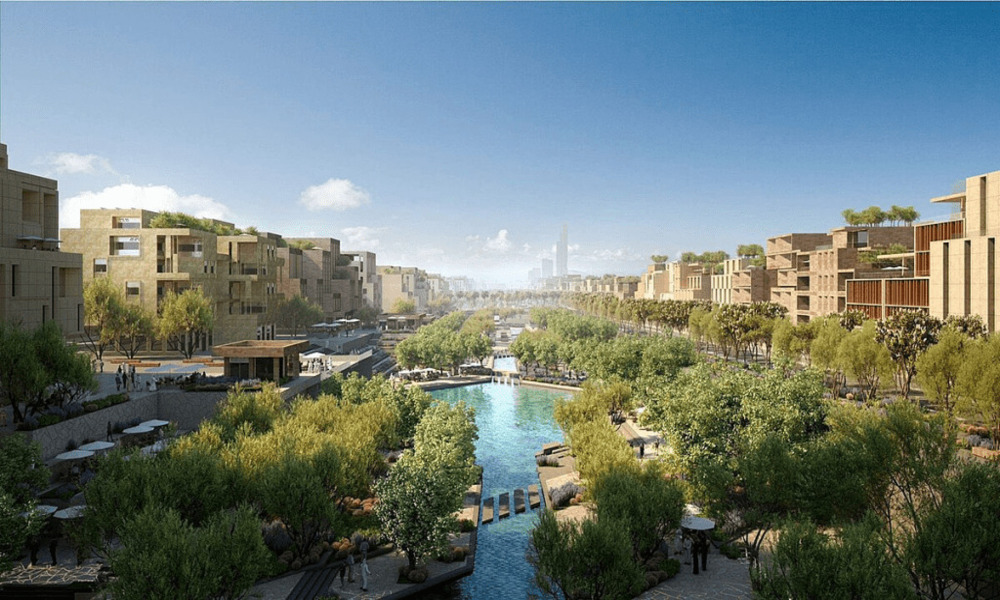
Traditional masterplanning in the region often delivered residential, retail, education and leisure as neighbouring but disconnected components. Integrated living reverses this logic. It treats housing not as a standalone product but as one element within a deliberately planned ecosystem, where homes are interwoven with schools, healthcare, shopping and leisure, green spaces and social infrastructure.
Adjacency does not automatically translate into accessibility or daily use. When amenities are embedded, rather than appended, they influence how people move, spend time and build routines. Over time, this shapes demand, pricing resilience and community identity.
The shift towards community-first planning reflects a deeper understanding of how residents now evaluate value. Price and location remain important, but they no longer operate in isolation. Walkability, access to daily needs, and the quality of public space increasingly determine whether a community succeeds in the long-term.

Aerial view of Dhahran City- Saudi Arabia.
Urbanisation is accelerating the need for integration
Saudi Arabia is now more than 85% urbanised, and is set to increase further by 2030. Riyadh alone is expected to approach a metropolitan population of 9 million by the end of the decade. Similar pressures are evident in Jeddah and the Dammam Metropolitan Area.
This scale of urban growth has placed strain on low-density residential models designed for a different era. Longer commute times, rising land values and shifting household structures are exposing the limitations of car-dependent planning. Integrated neighbourhoods offer a response by reducing reliance on long journeys and supporting more efficient land use.
This is not simply an urban planning trend, but a question of demographics.
More than 60% of the Kingdom’s population is under the age of 35. This younger cohort is entering the housing market with expectations shaped by global exposure, digital lifestyles and changing social norms. Community interaction, convenience and shared amenities often carry as much weight as plot size or standalone privacy.
Housing typologies are adapting
One visible outcome of this transition is the evolution of the housing mix. Villa-dominated masterplans are giving way to more diverse typologies, including townhouses and low-rise apartments. This reflects affordability realities, but also changing preferences among first-time buyers and young families.
Smaller homes are no longer perceived as a compromise if they sit within well-designed neighbourhoods that offer access to green space, leisure and daily services. In many cases, residents are trading private land for shared amenities, a pattern we also see in mature global cities.
For developers and planners, this re-balancing requires more nuanced feasibility thinking. Density alone will not create value. The design of the public realm – streetscapes, walkways, communal spaces – now plays a decisive role in sales velocity and long-term performance.
Amenities are no longer optional
Perhaps the most significant change is the role of amenities. Parks, schools, healthcare facilities, sports infrastructure and retail were once treated as enhancements, added late in the development cycle if budgets allowed. Today, they are central determinants of residential value.
Communities that embed amenities from the outset consistently demonstrate stronger demand and more stable absorption. This is particularly important in a market that is becoming increasingly discerning and data-driven. Buyers and residents are better informed, more comparative and less willing to accept promises of future delivery.
The quality of the public realm is also a key differentiator. Well-designed open spaces support social interaction, physical wellbeing and a sense of belonging. They also provide resilience during market cycles, helping communities retain appeal for the long-term.
Integrated living supports national objectives
The implications of integrated living extend beyond the residential sector. A population that feels rooted and invested contributes to broader economic goals, from workforce stability to private sector growth.
By encouraging longer-term residency and stronger community ties, integrated neighbourhoods align with Vision 2030’s emphasis on quality of life and sustainable urbanisation. They also support more efficient public investment, as infrastructure is concentrated and utilised more effectively.
From a policy perspective, this reinforces the importance of early coordination between planners, developers and service providers. Integration cannot be retrofitted easily. It requires alignment from the earliest stages of land use planning and design.
A people-led approach to development
The rise of integrated living signals a broader shift from product-led to people-led development. Successful residential communities are no longer defined solely by architectural statements or headline amenities, but by how well they support everyday life.
This demands a deeper understanding of resident behaviour: how people move through space, where they gather, how often they interact with their surroundings. Developments that respond to these patterns are better positioned to deliver long-term value for both residents and investors.
Saudi Arabia’s residential market is entering a more mature phase. The focus is shifting from how many homes can be built to how well communities function. Integrated living is not a passing trend, but a structural response to urbanisation, changing demographics, and evolving lifestyles.
Those who plan residential environments as cohesive, human-centred ecosystems will define the next chapter of Saudi Arabia’s cities. Those who do not risk delivering housing that no longer reflects how people want to live.