CBRE Middle East releases Q4 2025 Saudi Arabia Real Estate Market Review

The fourth quarter of 2025 marked a significant shift in Saudi Arabia’s real estate market narrative, transitioning towards a more delivery-oriented era

CBRE Middle East has released its Q4 2025 Saudi Arabia Real Estate Market Review, which showcases a substantial shift in the Kingdom’s growth narrative, as the economy transitions from laying the groundwork for regulation to executing its plans at an accelerated pace.
The fourth quarter of 2025 marked a significant shift in Saudi Arabia’s real estate market narrative, transitioning towards a more delivery-oriented era. Project rationalisation and rephasing became evident as government investments redirected their focus to Expo and other major drivers. In Q3 2025, Saudi Arabia experienced a real GDP expansion of 4.8% year-on-year, driven by the strengthening oil sector and the resilience of the non-oil economy.
Inflation continued to ease, while net foreign direct investment surged by 34.5% during the same period. Regulatory advancements, particularly the finalisation of the Foreign Ownership Law and the launch of the Saudi Properties digital portal, played a pivotal role in shaping market sentiment, the report noted.
These reforms effectively channeled overseas demand into designated high-growth districts, while ensuring affordability for Saudi households, thereby creating a more structured and future-ready investment environment. Additionally, Saudi Arabia’s capital markets are increasingly welcoming international participation. Starting February 2026, the Saudi Exchange will welcome all foreign investors, easing QFI requirements and enhancing liquidity across various sectors, the report said.
Matthew Green, Head of Research, CBRE MENA comments, “Saudi Arabia has now entered a pivotal phase in its transformation journey, where the foundations laid over recent years are translating into visible progress and substantial economic impact. The combination of structural reforms, disciplined fiscal strategy and unprecedented project execution is creating a real estate environment defined not only by scale, but by maturity and long‑term resilience. As international capital flows deepen and delivery accelerates across residential, commercial, retail, hospitality and industrial sectors, the Kingdom is firmly positioning itself as one of the most compelling global markets of the next decade.”
The Office market continued to thrive, driven by the surge of multinational activity through the Regional Headquarters program. This program has now surpassed 780 licenses. Grade A occupancy in Riyadh is nearing capacity, signaling the emergence of a pre-leasing culture as occupiers seek to secure future space amidst the acute supply constraints. Prime rents in districts like the King Abdullah Financial District (KAFD) have reached new heights, supported by sustained demand and ongoing transport integration. These factors are elevating the appeal of KAFD’s premium commercial spaces.

The country’s Residential performance reflected a period of healthy rebalancing. Increased delivery, particularly in Riyadh, which is set to welcome 70,000 units over the next two years, has moderated price growth and pushed the market toward greater stability. While transaction activity has softened as stakeholders assess the implications of the new foreign ownership framework, Jeddah remains a standout performer, recording rising volumes.
Large-scale community developments, including Al Fursan and key projects within ROSHN’s portfolio, are reinforcing the sector’s long-term depth. Looking ahead, the implementation of the new foreign ownership law in January 2026 is expected to be a major catalyst for activity within designated residential investment communities.
Retail continued its transformation into a more experiential and lifestyle-driven sector. Construction progress at super-regional destinations, such as The Avenues Riyadh and Westfield Riyadh, underscores a national shift toward mixed-use, pedestrian-first hubs that integrate luxury, leisure, food and beverage, and digital experiences. With mall rents stabilising and POS (Point of Sale) data indicating strong performance in F&B and e-commerce channels, the sector is evolving into a diversified ecosystem that supports both physical and online consumption.
The Hospitality market experienced a softer performance cycle as new supply impacted occupancy levels. Major infrastructure milestones, such as the full operational launch of Red Sea International Airport and the opening of Six Flags Qiddiya City, are expected to boost demand in emerging destinations. Luxury and branded hospitality remain main themes, as evidenced by the Four Seasons and Trump International announcements in Diriyah, and the major premium residential offerings in Makkah’s Masar Destination.
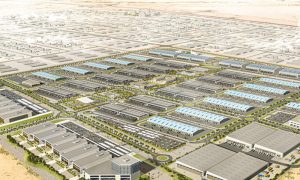
Industrial & Logistics remained in demand, driven by rapid e-commerce growth, strategic logistics partnerships, and a national logistics strategy that attracted substantial private investment. Consequently, industrial rents continued to rise in Riyadh and Jeddah. Additionally, significant new agreements, such as the planned development of 2m sqm of smart logistics assets in the Golden Triangle, are positioning the sector for sustained expansion, the report concluded.